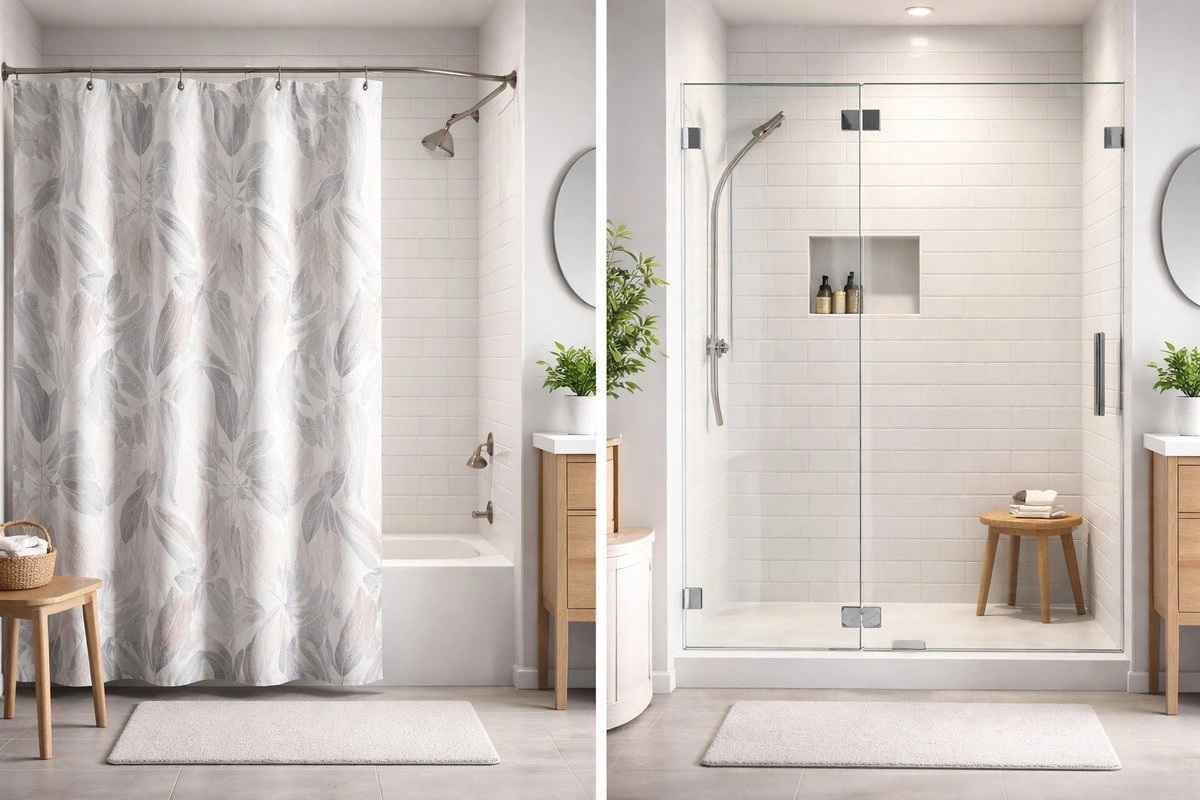
The choice between a shower curtain and glass door affects your bathroom's appearance, functionality, maintenance requirements, and budget

Product Researcher | Specializing in bathroom products and home textiles
The Short Answer
If you prioritize low cost, easy maintenance, and design flexibility, choose a shower curtain. Total cost is $20 to $80, replacement takes minutes, and you can change the look any time. If you prioritize a sleek, premium feel, smaller bathroom visual openness, and long-term durability, choose a glass door. Expect $400 to $2,500 installed and ongoing squeegee discipline to keep it looking good.
For most U.S. homes — especially rentals, family bathrooms, and budget renovations — a quality fabric shower curtain delivers 80 percent of the visual impact of a glass door at less than 10 percent of the cost. We recommend the curtain in those cases. Glass doors earn their premium in primary suites of homes you plan to keep, where the upgrade pays back through resale value and daily aesthetics.
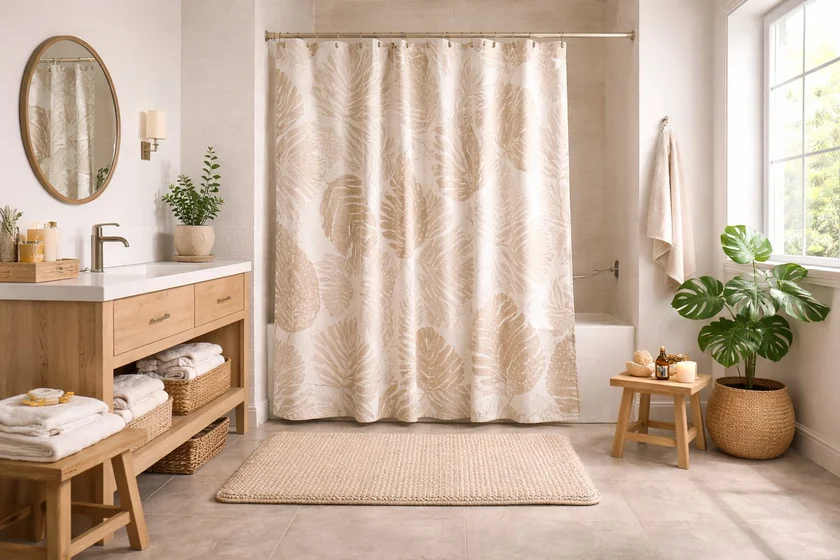
Hotel Collection Waffle Weave Shower Curtain
Luxury hotel quality • Machine washable • 15,000+ reviews
If you are renovating a bathroom, moving into a new home, or simply wondering whether your current setup is the best option, you have probably asked yourself: should I use a shower curtain or a glass door? It is one of the most common bathroom design questions, and the answer is far more nuanced than most people realize. Both options have passionate advocates, and both have legitimate advantages depending on your circumstances.
The shower curtain versus glass door debate touches on almost every aspect of bathroom design and daily life. It affects how your bathroom looks and feels, how much you spend upfront and over time, how much maintenance you perform each week, how accessible your shower is for different family members, and even your home's resale value. There is no universal "best" answer — the right choice depends entirely on your specific bathroom layout, your budget, your household composition, and your personal preferences for aesthetics and convenience.
Glass shower doors have become increasingly popular in modern bathroom renovations, driven by their sleek appearance and the perception of a more "finished" look. Walk into any bathroom showroom or browse Pinterest boards for bathroom inspiration, and you will see frameless glass enclosures dominating the visuals. This has created a perception that glass doors are inherently superior — the "upgrade" choice that sophisticated homeowners make when they want a premium bathroom.
But this perception does not tell the whole story. Shower curtains have their own compelling advantages that explain why they remain the most popular shower enclosure choice in American homes. They cost a fraction of glass doors, they are dramatically easier to install and replace, they require less maintenance to look good, they offer unmatched flexibility for design changes, and they are often the safer and more practical choice for families with children or elderly members. Many high-end hotels and spas deliberately choose fabric shower curtains over glass for the warm, inviting aesthetic they create.
In this comprehensive comparison guide, we examine shower curtains and glass doors across every dimension that matters: cost, installation, maintenance, style, water containment, safety, accessibility, and home value impact. We present the honest trade-offs for each option and provide specific recommendations based on different bathroom types and household situations. By the end, you will have all the information you need to make a confident, informed decision that serves your needs for years to come.
What This Guide Covers
- Initial cost comparison: Purchase price and installation expenses for both options
- Long-term cost analysis: Maintenance, repairs, and replacement over 10+ years
- Maintenance reality check: What each option actually requires to look good
- Style and aesthetics: Design flexibility and visual impact in different bathrooms
- Practical considerations: Water containment, safety, accessibility, and daily use
- Best use cases: Which option wins for specific bathroom types and situations
Table of Contents
Shower Curtains: Complete Overview
Shower curtains have been the standard shower enclosure solution for over a century, and they remain the most widely used option in homes across America and around the world. Despite the rise of glass doors in recent decades, shower curtains continue to dominate the market for good reasons: they are affordable, versatile, easy to install, simple to maintain, and available in endless styles to match any bathroom design. Understanding the full picture of what shower curtains offer — both the advantages and the limitations — is essential for making an informed comparison.
How Shower Curtains Work
A typical shower curtain setup consists of two or three components: a curtain rod (either tension-mounted or wall-mounted), the shower curtain itself (decorative outer curtain, waterproof liner, or combination), and hooks or rings to connect the curtain to the rod. The curtain hangs from the rod and creates a flexible barrier that contains water spray within the shower or tub area while providing privacy. When not in use, the curtain can be pushed to one side or both sides, opening up the shower entry completely.
Modern shower curtains come in three main material categories: fabric (polyester or cotton), which offers the best aesthetics and durability; PEVA (polyethylene vinyl acetate), which provides affordable waterproof protection without toxic chemicals; and vinyl (PVC), the traditional plastic option that is being phased out due to health and environmental concerns. Many homeowners use a two-curtain system with a decorative fabric outer curtain and a waterproof PEVA liner, achieving both style and function. For a great fabric option, check out the Linen Textured Shower Curtain which combines luxury feel with easy maintenance.
Shower Curtain Advantages
Dramatically Lower Cost
The most significant advantage of shower curtains is their affordability. A complete shower curtain setup — quality fabric curtain, PEVA liner, rod, and hooks — costs $30 to $75 total. Even a premium waffle-weave fabric curtain like the Heavy Duty Weighted Hem with all accessories rarely exceeds $100. Compare this to glass door installations that start at $300 and routinely reach $1,000 to $2,000 or more. For budget-conscious homeowners or anyone furnishing multiple bathrooms, shower curtains deliver enormous cost savings without sacrificing functionality.
Easy DIY Installation
Installing a shower curtain is a five-minute project that requires no tools, no special skills, and no professional help. Tension rods simply twist into place between walls; even wall-mounted rods require only a drill and two screws. Anyone can do it. Glass door installation, by contrast, typically requires professional expertise, precise measurements, and careful handling of heavy glass panels. The ease of curtain installation also makes changes and updates trivially simple — you can completely transform your bathroom's look in minutes.
Maximum Design Flexibility
Shower curtains offer unmatched freedom to update your bathroom's appearance. Want to refresh the look for a new season, match new towels, or simply try something different? Swap the curtain for under $20 and five minutes of effort. This flexibility is impossible with glass doors, which are permanent installations that commit you to a single aesthetic for years or decades. For renters, seasonal decorators, or anyone who enjoys variety, curtains provide creative freedom that glass cannot match.
Easier Maintenance
While both shower curtains and glass doors require regular cleaning, the maintenance burden differs significantly. A fabric shower curtain can be thrown in the washing machine once a month — set it, forget it, and it comes out fresh. PEVA liners are similarly machine-washable. When a curtain or liner eventually wears out, replacement costs under $20 and takes minutes. Glass doors, meanwhile, show every water spot, soap scum buildup, and hard water stain. Keeping glass looking pristine requires daily squeegee use after every shower plus weekly deep cleaning with specialized products.
Better Safety Profile
Shower curtains eliminate several safety risks associated with glass doors. There is no possibility of glass breakage or shattering, no hard edges to bump into, no heavy door to accidentally swing into someone, and no threshold or track to trip over when entering or exiting the shower. For households with young children, elderly family members, or anyone with mobility concerns, these safety advantages are significant. The soft, flexible nature of fabric and PEVA materials simply poses fewer injury risks than rigid glass.
Improved Accessibility
Shower curtains provide a wider, unobstructed entry to the shower space compared to most glass door configurations. The curtain can be pushed completely aside, creating full-width access that accommodates wheelchairs, shower chairs, caregivers assisting bathers, or simply the comfort of a wide opening. Many glass door designs — particularly sliding doors and pivot doors — restrict the accessible opening width. For aging-in-place design or anyone with current or anticipated accessibility needs, curtains offer practical advantages.
Shower Curtain Disadvantages
Despite their many advantages, shower curtains do have legitimate drawbacks that may matter depending on your priorities:
- Less "finished" appearance: Glass doors often look more polished and contemporary, especially in modern or minimalist bathroom designs. Curtains can appear more casual or traditional, which may not suit every aesthetic vision.
- Water containment limitations: While properly installed curtains with magnetic hems and weighted bottoms contain water effectively, they are inherently less watertight than sealed glass enclosures. Water can escape around edges, especially with billowing from shower air currents.
- Shorter lifespan: Fabric curtains last 1-2 years with proper care; PEVA liners typically last 6-12 months. Glass doors, properly maintained, can last 20+ years. The ongoing replacement costs partially offset curtains' lower upfront price (though curtains still win on total cost of ownership for most timeframes).
- Potential mildew issues: Curtains that are not properly dried or regularly washed can develop mildew, especially in poorly ventilated bathrooms. This requires more attention to post-shower habits and regular washing schedules.
- Perceived "lower value": Some homebuyers perceive glass doors as a premium upgrade. In certain real estate markets and price ranges, shower curtains may be seen as a feature to upgrade rather than a selling point.
Best Shower Curtain Use Cases
Shower curtains are the optimal choice in these situations:
- Budget-conscious renovations or furnishing multiple bathrooms
- Rental apartments where permanent modifications are not allowed
- Households with young children or elderly family members (safety)
- Anyone with mobility limitations or accessibility needs
- Bathrooms with non-standard dimensions or unusual layouts
- Homeowners who enjoy changing decor seasonally or frequently
- Traditional, vintage, or cottage-style bathroom designs
- Bathtub/shower combos (glass doors can feel cramped)
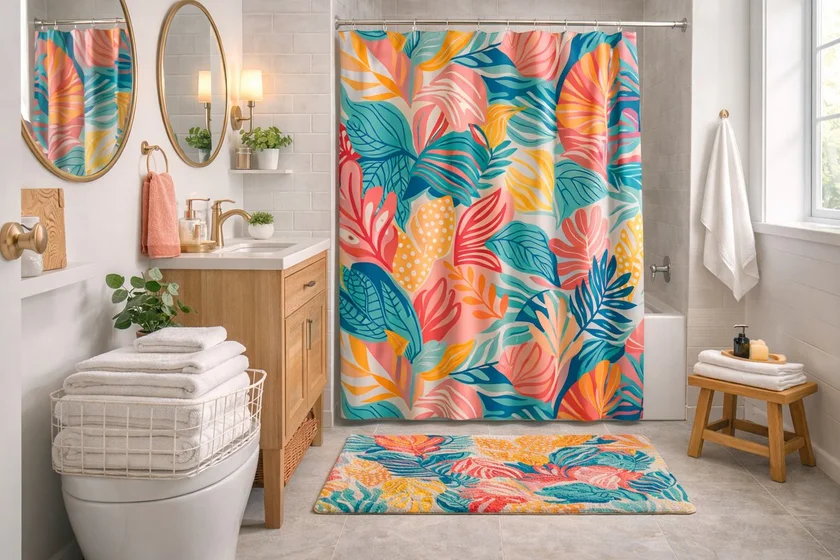
A well-chosen fabric shower curtain can create a warm, spa-like atmosphere that rivals any glass enclosure
Glass Shower Doors: Complete Overview
Glass shower doors have become synonymous with modern bathroom design, appearing in countless renovation projects, real estate listings, and design magazines. The appeal is undeniable: a glass enclosure can make a bathroom feel larger, brighter, and more contemporary. It creates clean visual lines, showcases beautiful tile work, and signals attention to quality. For homeowners pursuing a specific modern aesthetic or preparing a home for sale, glass doors often feel like the obvious "upgrade" choice.
However, the reality of living with glass shower doors involves trade-offs that the glossy photos do not reveal. The higher cost, demanding maintenance requirements, and practical limitations mean glass doors are not universally superior — they are simply a different option with their own set of advantages and disadvantages. Understanding both sides is essential for making a choice you will be happy with long-term.
Types of Glass Shower Doors
Glass shower doors come in several configurations, each with different price points, installation requirements, and aesthetic effects:
- Framed sliding doors: The most affordable glass option, featuring aluminum frames around the glass panels that slide along a track. Common in standard bathtub/shower combos. Cost: $200-$500 for materials.
- Semi-frameless doors: Minimal framing with a cleaner look than fully framed options, but less expensive than frameless. Cost: $400-$900 for materials.
- Frameless pivot doors: A single glass panel that swings open on hinges, with no visible frame. Creates a modern, open appearance. Cost: $600-$1,500 for materials.
- Frameless fixed panels: Stationary glass panels that do not open, often used with a partial opening for entry. Minimalist look. Cost: $300-$800 for materials.
- Frameless enclosures: Multiple frameless panels forming a complete shower enclosure, often with hinged door. The premium option. Cost: $800-$2,000+ for materials.
According to Angi, installation costs add $150 to $500 or more depending on the complexity of the project and local labor rates. Frameless installations typically require professional expertise due to the weight of the glass, the precision required for proper alignment, and the need for specialized hardware mounting.
Glass Shower Door Advantages
Sleek, Modern Aesthetic
The primary appeal of glass doors is their appearance. Frameless glass enclosures, in particular, create a seamless, contemporary look that can transform a bathroom's entire feel. The transparency of glass makes spaces appear larger and brighter by allowing light to pass through uninterrupted. Glass also showcases decorative tile work, stone surfaces, and other design elements that would be hidden behind a curtain. For modern, minimalist, or luxury bathroom designs, glass doors often provide the visual impact that completes the space.
Superior Water Containment
When properly installed with quality seals, glass shower doors create a more watertight enclosure than shower curtains. There is no billowing fabric, no gaps at the edges, and no reliance on magnets or weights to hold the barrier in place. For bathrooms where water escaping onto the floor is a persistent problem, or for powerful shower systems with multiple spray heads, glass doors provide more reliable water containment.
Exceptional Longevity
Glass shower doors can last 20 to 30 years or more with proper care. Unlike shower curtains that need replacement every one to two years, a glass installation is a long-term investment that will not require ongoing material costs. The hardware and seals may need occasional replacement, but the glass panels themselves are extremely durable. For homeowners planning to stay in their home long-term, the longevity of glass can offset its higher upfront cost.
Potential Home Value Impact
In certain markets and price ranges, glass shower doors — especially frameless enclosures — are perceived as a premium feature that adds value. Real estate agents often highlight updated bathrooms with glass showers as selling points. While the actual return on investment varies widely, glass doors can contribute to a bathroom's overall updated appearance in ways that appeal to buyers. This matters most in higher-end homes and competitive real estate markets.
No Fabric Maintenance
Glass does not mildew, does not absorb odors, does not wrinkle or fade, and does not need to be washed and dried like fabric curtains. While glass has its own maintenance demands (significant ones, as we will discuss), some homeowners prefer the type of maintenance glass requires over the fabric care curtains demand. It is a matter of personal preference for which cleaning routine fits your lifestyle better.
Glass Shower Door Disadvantages
The disadvantages of glass doors are substantial and often underestimated by homeowners who have not yet lived with them:
High Upfront Cost
Glass shower doors cost 5 to 50 times more than shower curtains. A basic framed sliding door starts around $350 installed; a frameless enclosure can easily exceed $2,000. For homeowners on a budget or furnishing multiple bathrooms, this cost difference is enormous. That money could be spent on other bathroom upgrades (new vanity, better lighting, tile work) that might have greater impact on both daily enjoyment and home value.
Demanding Maintenance Requirements
This is the hidden burden of glass doors that design photos never show. Glass surfaces reveal every water spot, soap scum streak, and hard water mineral deposit with unforgiving clarity. To keep glass looking the way it does in showrooms, you need to squeegee the doors after every single shower, clean with specialized glass products weekly, and potentially deal with hard water stain removal that can require professional treatment. Many glass door owners report spending 10-20 minutes per week on glass maintenance alone — time that adds up to dozens of hours per year.
Professional Installation Required
Unlike shower curtains that anyone can install in minutes, most glass door projects require professional expertise. Heavy glass panels must be handled carefully, precise measurements are critical, and improper installation can result in leaks, misalignment, or safety hazards. This adds $150-$500 or more in labor costs and means coordinating with contractors rather than completing a simple DIY project.
Safety Considerations
While modern tempered glass is designed to break into small, relatively safe pieces, the reality is that glass shower doors can and do break. Sudden temperature changes, manufacturing defects, or impact can cause spontaneous shattering. Even when functioning normally, glass doors present hard edges that can cause injury if bumped into, heavy doors that can swing into people, and tracks or thresholds that create trip hazards. For households with young children or elderly members, these risks deserve serious consideration.
Limited Accessibility
Most glass door configurations restrict the accessible opening width compared to shower curtains. Sliding doors typically open to only half the shower width. Pivot doors require clearance to swing open. Even frameless fixed panels with partial openings limit access compared to a curtain that can be pushed completely aside. For wheelchair users, caregivers assisting bathers, or anyone with mobility limitations, glass doors can create practical barriers to shower access.
No Design Flexibility
Once installed, glass doors are a permanent commitment. Unlike curtains that can be swapped for $20 and five minutes of effort, changing glass doors means another expensive professional project. If your design tastes change, if the glass becomes damaged, or if you simply want a fresh look, you are facing significant cost and hassle to make changes.
Best Glass Door Use Cases
Glass shower doors are the optimal choice in these situations:
- Modern, minimalist, or luxury bathroom designs where the aesthetic matters greatly
- Bathrooms with beautiful tile work or stone that you want to showcase
- Long-term homeowners committed to meticulous maintenance routines
- Homes being prepared for sale in higher-end real estate markets
- Walk-in shower stalls (no tub) where glass creates an open, spa-like feel
- Bathrooms with persistent water containment issues that curtains cannot solve
- Households without young children or elderly members (safety considerations)
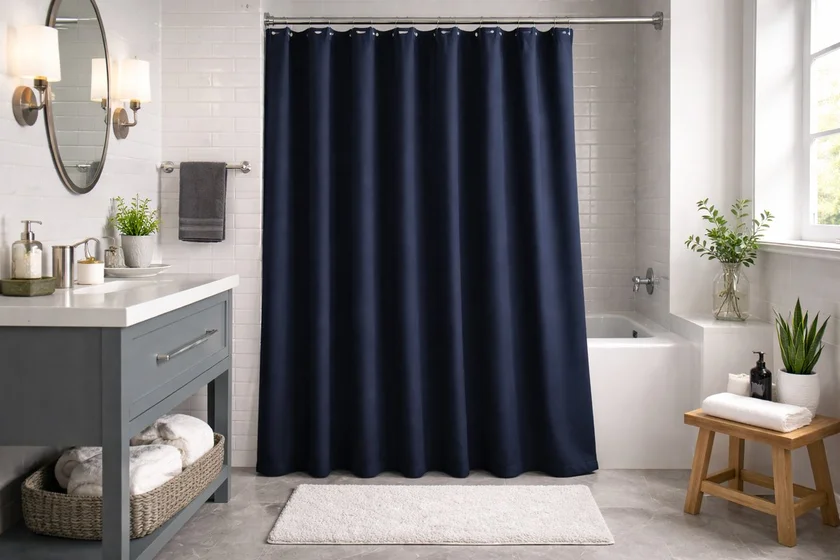
Both shower curtains and glass doors can achieve stunning results when chosen to complement your overall bathroom design
Side-by-Side Comparison: Shower Curtain vs Glass Door
The table below summarizes every key difference between shower curtains and glass doors. Use this as a quick reference when evaluating which option better fits your needs.
| Factor | Shower Curtain | Glass Door | Winner |
|---|---|---|---|
| Initial Cost | $30-$75 (complete setup) | $350-$2,500+ (installed) | Curtain |
| 10-Year Cost | $200-$400 | $400-$2,700 | Curtain |
| Installation | 5 minutes, DIY, no tools needed | Professional required, 2-4 hours | Curtain |
| Maintenance Time | ~30 min/month (machine wash) | ~10-20 min/week (squeegee + clean) | Curtain |
| Lifespan | 1-2 years (fabric), 6-12 months (liner) | 20-30 years | Glass |
| Water Containment | Good with proper installation | Excellent | Glass |
| Modern Aesthetic | Traditional/classic look | Sleek, contemporary look | Glass |
| Design Flexibility | Endless options, easy to change | Fixed once installed | Curtain |
| Safety | No shatter risk, soft edges | Potential shatter, hard edges | Curtain |
| Accessibility | Full-width opening possible | Restricted opening width | Curtain |
| Renter-Friendly | Yes, no permanent changes | No, permanent installation | Curtain |
| Home Value Impact | Neutral | Potentially positive (market-dependent) | Glass |
| Space Feel | Warm, cozy, traditional | Open, airy, modern | Tie (preference) |
| Best For | Budget, families, renters, flexibility | Modern design, long-term, resale | Depends on priorities |
Key takeaway: Shower curtains win on cost, installation, maintenance, safety, accessibility, and flexibility. Glass doors win on longevity, water containment, modern aesthetics, and potential home value impact. The "better" choice depends entirely on which factors matter most to your specific situation.
Which Is Better for Different Bathroom Types
The best choice between shower curtains and glass doors varies significantly based on your specific bathroom layout, your household composition, and your usage patterns. Here is our recommendation for each common scenario:
Small Bathrooms (Under 50 sq ft)
In small bathrooms, the flexibility of a shower curtain provides practical advantages. Curtains can be pushed aside completely, making the space feel more open when not showering. Glass doors in tight spaces can feel cramped and make the bathroom appear even smaller. A light-colored or semi-transparent curtain can create visual depth, while a clear glass door in a tiny bathroom often highlights the limited space. Additionally, small bathrooms typically have limited budgets where the cost difference matters more.
Large Master Bathrooms
Spacious master bathrooms with dedicated walk-in showers are where glass doors shine brightest. The larger space can accommodate a frameless enclosure without feeling cramped, and the visual impact of glass complements the luxury feel of a well-designed master bath. However, even here, the maintenance commitment is significant. If you are not prepared to squeegee after every shower and deep clean weekly, a high-quality fabric curtain system can look equally elegant with far less effort.
Bathtub/Shower Combos
For standard tub/shower combinations, shower curtains are typically the better choice. Framed sliding glass doors on tubs often look dated rather than modern, and the track systems can be challenging to keep clean. A quality fabric curtain with a PEVA liner creates an attractive, functional setup that is easy to maintain. The curtain also makes bathtub use more pleasant — you can push the curtain aside for an open tub experience that glass doors do not allow.
Walk-In Showers (No Tub)
Walk-in shower stalls are where glass doors make the most sense aesthetically. A frameless glass enclosure around a walk-in shower can create a stunning, spa-like appearance that showcases tile work and makes the bathroom feel larger. However, shower curtains on tension rods or ceiling-mounted tracks can also work beautifully in walk-in showers, particularly for households prioritizing accessibility, budget, or maintenance ease. The choice depends on your design vision and willingness to maintain glass.
Children's Bathrooms
For bathrooms used primarily by children, shower curtains are strongly recommended. The safety advantages are significant: no glass to potentially break, no hard edges at child height, no heavy doors that could swing into little bodies, and no tracks to trip over. Children are also unlikely to appreciate the aesthetic difference of glass or perform the maintenance required to keep it looking good. A durable polyester curtain that can be machine-washed after inevitable messes is far more practical.
Guest Bathrooms
Guest bathrooms see intermittent use, which creates specific considerations. Glass doors in unused bathrooms still collect dust and water spots that need cleaning before guests arrive. A shower curtain can be quickly refreshed or replaced for minimal cost. Guest bathrooms are also not spaces where you are likely to recoup investment in premium finishes, making the cost savings of curtains more valuable here.
Accessible Bathrooms / Aging-in-Place
For bathrooms designed with accessibility in mind or modified for aging-in-place, shower curtains are typically essential. The full-width opening allows wheelchair access, space for caregivers, and accommodation of shower chairs and benches. There are no threshold tracks to navigate, no heavy doors to manage, and no hard surfaces that could cause injury during a fall. Accessibility-focused bathroom design almost universally favors curtains over glass.
Rental Apartments
For renters, shower curtains are the only practical option. Most leases prohibit permanent modifications, and glass door installation is a significant structural change. Even if allowed, investing in glass for a property you do not own makes little financial sense. A quality fabric curtain can make any rental bathroom look polished and personal, and you can take it with you when you move.
Homes Being Prepared for Sale
For homes going on the market, the right choice depends on context. In higher-end markets with dated bathrooms, a glass door upgrade can be part of a strategic renovation that increases sale price. In moderate markets or bathrooms that are otherwise outdated, the money is better spent on other improvements. A fresh, high-quality shower curtain in a clean bathroom photographs well and does not signal "needs upgrading" to buyers — especially when paired with other thoughtful touches like new hardware and fresh paint.
Detailed Cost Comparison: Initial + Long-Term
Understanding the true cost of shower curtains versus glass doors requires looking beyond the initial purchase price. Both options have ongoing costs that affect the total investment over time. Here is a comprehensive breakdown.
Shower Curtain Costs
Initial Setup (One-Time):
- Tension rod or basic mounted rod: $10-$30
- Quality fabric shower curtain: $15-$40
- PEVA waterproof liner: $8-$15
- Shower hooks or rings: $8-$20
- Total initial cost: $41-$105
Annual Ongoing Costs:
- Replacement liner (1-2 per year): $8-$30
- Replacement curtain (every 1-2 years): $8-$20 annually
- Annual maintenance cost: $16-$50
10-Year Total Cost of Ownership:
- Initial setup: $41-$105
- Liners (15-20 replacements): $120-$300
- Curtains (5-10 replacements): $75-$400
- 10-year total: $236-$805
- Typical 10-year cost: ~$350-$500
Glass Door Costs
Initial Installation (One-Time):
- Budget option (framed sliding): $200-$500 materials + $150-$300 installation = $350-$800 total
- Mid-range option (semi-frameless): $400-$900 materials + $200-$400 installation = $600-$1,300 total
- Premium option (frameless enclosure): $800-$2,000 materials + $300-$500 installation = $1,100-$2,500 total
Annual Ongoing Costs:
- Specialized glass cleaning products: $20-$50/year
- Seal/gasket replacement (every 5-10 years): $10-$30 annually averaged
- Hard water stain treatment (if needed): $30-$100 periodically
- Annual maintenance cost: $30-$80
10-Year Total Cost of Ownership:
- Budget glass option: $350-$800 + $300-$800 maintenance = $650-$1,600 total
- Mid-range glass option: $600-$1,300 + $300-$800 maintenance = $900-$2,100 total
- Premium glass option: $1,100-$2,500 + $300-$800 maintenance = $1,400-$3,300 total
Cost Comparison Summary
| Cost Category | Shower Curtain | Glass Door (Budget) | Glass Door (Premium) |
|---|---|---|---|
| Initial Cost | $41-$105 | $350-$800 | $1,100-$2,500 |
| Annual Maintenance | $16-$50 | $30-$80 | $30-$80 |
| 5-Year Total | $121-$355 | $500-$1,200 | $1,250-$2,900 |
| 10-Year Total | $236-$805 | $650-$1,600 | $1,400-$3,300 |
| Typical 10-Year | ~$400 | ~$1,000 | ~$2,200 |
Bottom line on cost: Over a 10-year period, shower curtains cost roughly $400 while glass doors cost $1,000 to $2,200+. The savings from choosing curtains — $600 to $1,800 over a decade — could fund other bathroom upgrades, home improvements, or simply remain in your pocket. Glass doors are only "worth it" if the aesthetic and functional differences matter enough to you to justify the premium.
Frequently Asked Questions
"Better" depends entirely on your priorities. Glass doors are better for modern aesthetics, showcasing tile work, long-term durability, and potentially home value in certain markets. Shower curtains are better for budget-conscious homeowners, renters, families with children or elderly members, accessibility needs, design flexibility, and lower maintenance. Neither is universally superior — the right choice depends on your specific situation, and shower curtains remain the practical choice for most households.
Glass shower doors can contribute to perceived home value, particularly frameless enclosures in updated bathrooms. Real estate experts suggest well-designed glass showers can add $500-$2,000 to perceived value in the right contexts. However, the return on investment varies significantly by market, home price range, and overall bathroom condition. In lower-priced homes or bathrooms with other dated elements, the money spent on glass doors often provides lower ROI than other upgrades like new vanities, modern lighting, or fresh paint.
Yes, glass shower doors require consistent, demanding maintenance to look their best. Hard water stains, soap scum, and water spots are highly visible on glass surfaces and accumulate quickly. Best practice is to squeegee the glass after every shower (adding 1-2 minutes per use), clean weekly with specialized glass products, and address hard water buildup before it becomes permanent. Many homeowners underestimate this commitment before installing glass doors. Shower curtains, by comparison, can be machine washed monthly and replaced inexpensively when worn.
Glass shower door costs vary widely based on type and quality. Framed sliding doors cost $200-$500 for materials plus $150-$300 for installation ($350-$800 total). Semi-frameless doors run $400-$900 plus $200-$400 installation ($600-$1,300 total). Frameless enclosures cost $800-$2,000+ for materials with $300-$500 professional installation ($1,100-$2,500+ total). Custom sizes, specialty glass, or complex configurations can push prices higher. Compare this to $40-$100 for a complete shower curtain setup that you can install yourself in minutes.
Yes, and many homeowners choose to do so for convenience, cost savings, safety, or accessibility reasons. The process involves removing the glass door panels and hardware, patching any mounting holes in the walls or tile, and installing a curtain rod (either tension-mounted or wall-mounted). This conversion is particularly common when elderly family members move in, when children reach bathing age, or when homeowners tire of the maintenance demands of glass. The switch typically costs under $100 and can be completed in a few hours.
Shower curtains have a clearly better safety profile. While modern tempered glass is designed to shatter into small pieces rather than sharp shards, glass door accidents can still cause injury. Glass doors also present hard edges that can hurt if bumped into, heavy doors that can swing forcefully, and threshold tracks that create trip hazards. Shower curtains eliminate these risks entirely — there is nothing hard to hit, nothing heavy to control, and nothing to trip over. For households with young children, elderly family members, or anyone with balance concerns, curtains are the safer choice.
Not when chosen thoughtfully. A high-quality fabric shower curtain — such as a waffle weave, linen-look, or textured polyester design — can appear just as elegant as glass, and sometimes more so due to the warmth and softness fabric adds to a space. Many luxury hotels deliberately choose fabric curtains over glass for their spa-like aesthetic. The key is selecting a curtain that complements your overall design, using quality metal rings and a sturdy rod, and keeping the curtain clean and well-maintained. The "cheap curtain" perception comes from flimsy plastic liners and outdated prints, not from curtains as a category.
Related Guides
Final Verdict and Recommendations
After examining every aspect of the shower curtain versus glass door decision, the honest conclusion is that shower curtains are the right choice for most households. They cost dramatically less, require far less maintenance, offer unmatched flexibility, and provide better safety and accessibility — all while being capable of looking every bit as attractive as glass when you choose quality products.
Glass doors have their place: they make sense for homeowners with generous budgets who prioritize modern aesthetics, are committed to diligent maintenance, plan to stay in their homes long-term, and do not have accessibility concerns. In high-end master bathrooms with walk-in showers and beautiful tile work, a frameless glass enclosure can be a worthwhile investment that completes the space.
But for the majority of bathrooms and households, shower curtains deliver better value, more flexibility, easier maintenance, and superior practicality. The money saved compared to glass — potentially $1,000 to $2,000 or more — can fund other improvements that may have greater impact on your daily enjoyment and home value.
Our Specific Recommendations:
Choose a Shower Curtain If:
- You are budget-conscious or furnishing multiple bathrooms
- You rent your home or may move in the next few years
- You have children under 12 or elderly family members
- Anyone in your household has mobility or accessibility needs
- You dislike frequent cleaning or demanding maintenance routines
- You enjoy updating your decor periodically
- Your bathroom has a tub/shower combo
Choose Glass Doors If:
- Modern/minimalist aesthetics are a top priority and budget is flexible
- You have a walk-in shower with beautiful tile to showcase
- You are committed to daily squeegee use and weekly deep cleaning
- You plan to stay in your home for 10+ years to amortize the cost
- You are renovating a master bath in a higher-end home for resale
- Your household has no young children or elderly members
If you decide that a shower curtain is right for you — as it is for most people — invest in quality. A premium fabric curtain like a waffle weave polyester paired with a non-toxic PEVA liner creates a bathroom setup that looks sophisticated, performs reliably, and costs a fraction of glass. The articles below will help you find the perfect options:
Ready to Choose the Perfect Shower Curtain?
Explore our expert guides to find the best shower curtain for your bathroom.
All recommendations backed by extensive research and real customer reviews
Complete Your Bathroom Upgrade
Our network of expert review sites covers every bathroom essential: